
Smart Lock vs Traditional Deadbolt
Smart lock vs traditional deadbolt: compare convenience, cost, and security, see hybrid options, and find the best fit for your home or business.
We get asked about the smart lock vs deadbolt debate every single week.
This choice usually comes down to finding the right balance between modern convenience and proven reliability. The upfront price tag of an electronic upgrade can be surprisingly high, but the daily benefits often justify the cost.
Let’s look at the data, explore what it actually means for your daily routine, and help you make the best choice for your front door.
What Each Actually Is
A traditional deadbolt relies purely on mechanical parts, while a smart lock adds electronic components like keypads and wireless radios. Both options use a similar core locking mechanism to secure your door.
We evaluate both categories based on their internal hardware and daily usability. A traditional mechanical lock features a pin-and-tumbler cylinder, a solid throw-bolt, and a standard key. These mechanical fixtures operate without batteries, complex wiring, or companion mobile apps.
Our preferred commercial-grade mechanical models are built to last decades. A top-tier device achieving an ANSI/BHMA Grade 1 certification must successfully withstand one million open-and-close cycles. It also has to resist up to 800 lb-ft of torque from blunt force attacks.
A smart deadbolt takes that exact same mechanical foundation and wraps it in modern technology. The core throw-bolt and strike plate engagement function identically to a mechanical version. The true difference lies in everything surrounding the key cylinder.
Smart upgrades introduce battery power, motorized unlatching mechanisms, and communication protocols like Wi-Fi or Bluetooth. Most major brands still include a physical keyway as a crucial mechanical backup in case the electronics fail.
Comparing the Core Components
| Feature | Traditional Deadbolt | Smart Deadbolt |
|---|---|---|
| Power Source | Manual physical force | 4 AA batteries (typically) |
| Primary Access | Metal key | PIN code, app, or fingerprint |
| Mechanism Type | Pin-and-tumbler cylinder | Motorized thumbturn with mechanical backup |
What You Gain With a Smart Lock
You gain keyless entry, remote access control, and detailed activity logs. Upgrading to a digital entry system dramatically changes how you interact with your front door.
We consistently see homeowners benefit most from these specific modern features:
- Code-based entry: Family members use personalized PIN codes instead of carrying metal keys.
- Guest access: You can generate temporary codes for contractors that automatically expire.
- Activity logs: The companion app tracks exactly when specific user codes access the door.
- Auto-locking: The deadbolt automatically secures itself after a set time, curing the mid-day panic of wondering if you locked up.
Modern US market leaders offer incredibly fast entry methods. The Schlage Encode Plus supports Apple Home Key functionality, allowing users to open the door by simply tapping an iPhone or Apple Watch against the keypad.
Our team appreciates how these software features give you complete visibility and control over your property.
What You Give Up
You sacrifice infinite power, as smart locks require regular battery replacements and occasional software troubleshooting. The convenience of an electronic vs mechanical lock comes with mandatory ongoing maintenance.
We always warn clients about the specific trade-offs involved in an electronic upgrade:
- Battery dependence: Wi-Fi models drain four standard AA batteries in three to six months.
- Software complexity: You must manage app configurations and install periodic firmware updates.
- Higher upfront costs: The initial hardware is expensive, and some brands charge cloud subscription fees.
- Cybersecurity concerns: Wireless networks introduce potential hacking vulnerabilities.
Models using low-power protocols like Z-Wave or Bluetooth fare much better with power consumption, often lasting up to a year. You will still need to set calendar reminders to replace these batteries before they completely fail.
Electronic options also present a slightly larger attack surface for tech-savvy intruders. You can read our smart lock safety and reliability guide for an honest discussion about the actual risks of wireless hacking and network vulnerabilities.
The Hybrid Option
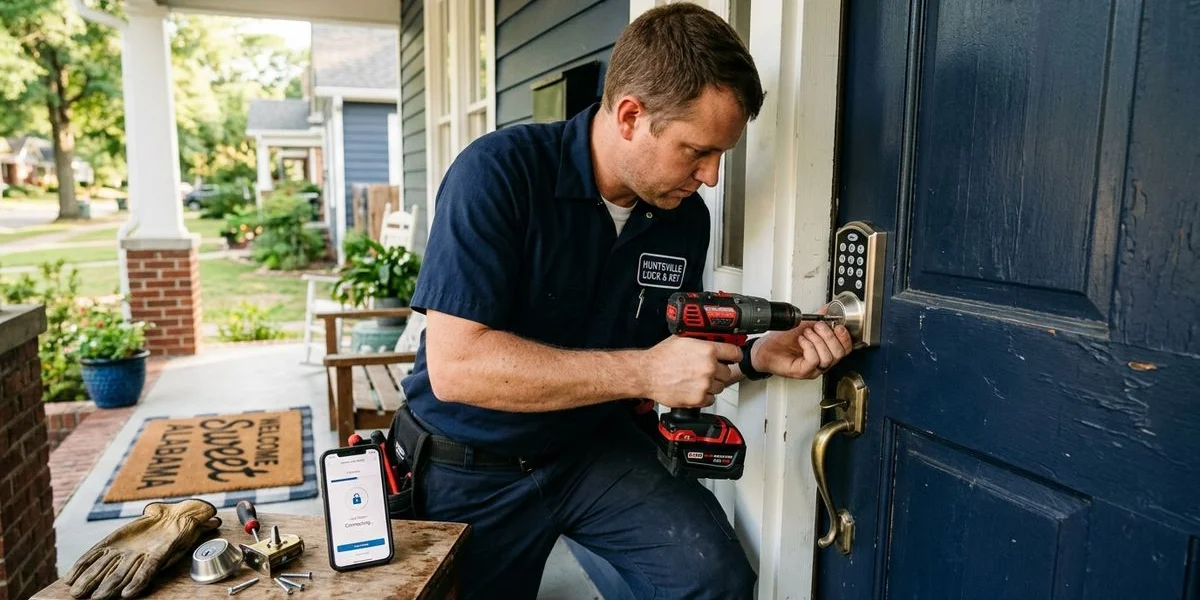
A hybrid approach uses a smart lock on the primary entry and mechanical locks on secondary doors. You do not have to commit your entire house to one single lock style.
We frequently install this mixed setup for families wanting the best of both categories. Mixing your hardware saves hundreds of dollars while maximizing everyday convenience.
- Front door: Install a smart deadbolt for code-based access, guest management, and daily convenience.
- Back door: Mount a Grade 1 traditional deadbolt for absolute simplicity and maximum physical strength.
- Garage entry, basement, and side doors: Use traditional Grade 1 or Grade 2 deadbolts for rarely used access points.
This strategy puts the high-tech convenience exactly where you need it most. It also maintains extreme reliability on doors you rarely use and do not want to monitor for low batteries.
If you decide to go this route, see our guide on the best high-security deadbolts for Alabama homes to find excellent traditional hardware picks.
When a Smart Lock Is Clearly Right
A smart deadbolt makes sense if you manage multiple users, run a rental property, or want to completely stop carrying physical keys. Certain lifestyles clearly demand the flexibility of digital access.
We highly recommend this electronic upgrade for specific, high-traffic scenarios:
- Large families: Assign unique PINs to kids, dog walkers, and housekeepers.
- Rental properties: Landlords and Airbnb hosts can generate auto-expiring per-guest codes.
- Smart home enthusiasts: Integrate the device via the Matter protocol to trigger indoor lights upon entry.
- Remote managers: Unlatch the door from your office desk to let a neighbor inside for an emergency.
Over 77 million US homes currently use some form of smart home tech. For many of these connected households, an automated front door serves as the critical anchor point for their entire security ecosystem.
When a Traditional Deadbolt Is Clearly Right
A mechanical deadbolt is the best choice if you prioritize absolute reliability, zero maintenance, and a much lower upfront cost. Some situations simply do not require an app or a Bluetooth radio.
Our technicians suggest traditional hardware for several common property setups:
- Low-traffic entryways: Side doors and basement entries rarely need advanced code management.
- Harsh weather exposure: Purely mechanical locks never suffer from weather-induced battery drain.
- Budget constraints: A premium Grade 1 mechanical deadbolt costs significantly less than a mid-tier smart option.
- Rental apartments: Renters usually cannot alter exterior hardware without violating their lease agreement.
Single users or couples with highly predictable schedules often find standard keys perfectly sufficient. A mechanical setup guarantees that you will never lose access due to a power outage or a home router failure.
A Note on Security Grade
The ANSI/BHMA security grade determines the actual physical strength of the hardware, regardless of whether it features a keypad or a keyhole. The smart lock or deadbolt debate often completely ignores this crucial metric.
We urge customers to compare Grade 1 mechanical locks directly against Grade 1 smart models to get an accurate picture. A cheap Grade 3 smart deadbolt provides significantly less physical security than a heavy-duty Grade 1 traditional lock.
Industry Standard Insight: A true Grade 1 traditional lock resists 800 lb-ft of torque and withstands one million cycles, making it highly resistant to physical attacks.
Premium smart options like the Schlage Encode and the Yale Assure 2 earn a true Grade 1 rating. Many budget electronic locks sold online only pass basic Grade 2 or Grade 3 testing, so you must always read the packaging carefully.
Talk to a Lock Installer
Calling a professional ensures your new hardware fits correctly and meets local safety standards. A misaligned strike plate will force an internal electronic motor to grind, draining the batteries in a matter of days.
We are ready to answer your questions and help you evaluate your security needs. Call (659) 399-0184 to talk through what fits your home or business perfectly.
For a comprehensive look at our full service range and installation capabilities, see our page on electronic access and smart locks.
Frequently Asked Questions
Is a smart lock worth it over a regular deadbolt?
Can I have both smart features and a physical key?
Which is more secure?
Related Guides
Are Smart Locks Safe and Reliable?
Are smart locks safe and reliable? An honest look at security, battery backup, hacking concerns, and which smart lock models a Huntsville locksmith trusts.
Types of Keyless Entry Systems Explained
Keypad, Bluetooth, RFID/prox, and cloud-based keyless entry explained: how each works, residential vs commercial fit, and the pros and cons of each.