
Fireproof vs Burglary-Rated Safes
Fireproof vs burglary-rated safes explained: UL fire ratings vs RSC and TL-15/TL-30 burglary ratings, and how to match a rating to what you're protecting.
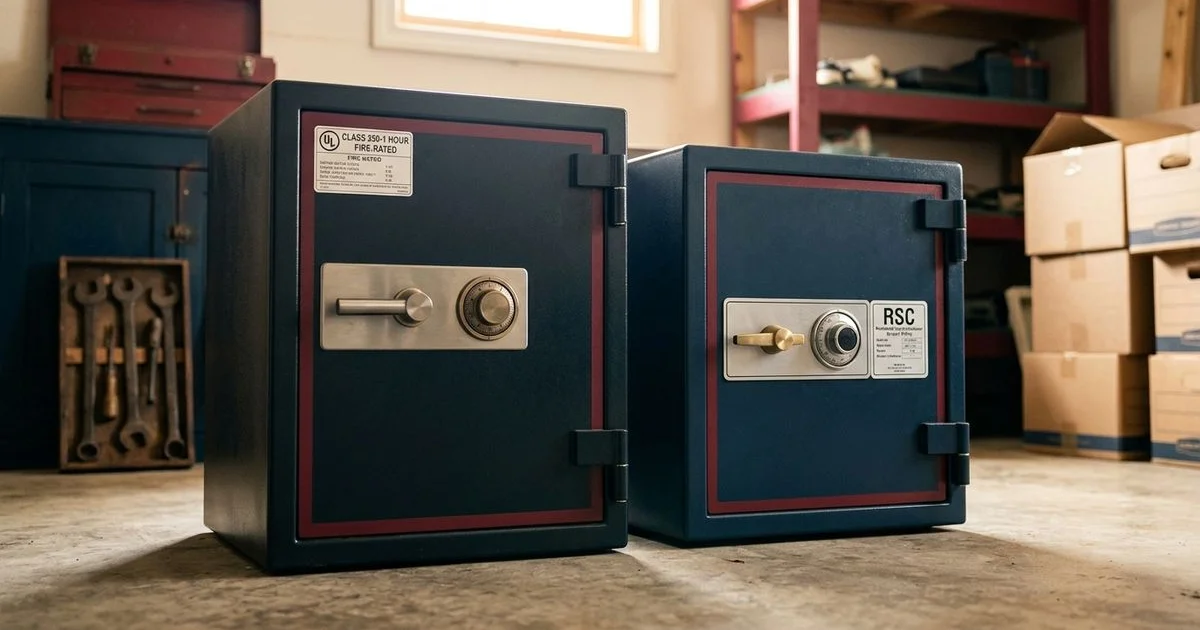
Many property owners struggle to decode the complex labels plastered inside security containers. We see this confusion every week in the field. Understanding fireproof vs burglary safe ratings is the key to protecting your most vital assets. These classifications answer two critical questions. How long will the interior survive a blaze? And how long can the exterior resist a determined thief with heavy tools? Let us break down exactly what these numbers mean and how to secure your property effectively.
Fire Ratings (UL Class)
Underwriters Laboratories (UL) tests safes by putting them in a furnace and measuring how long the interior temperature stays below a critical threshold. A typical United States house fire burns at roughly 1,100 degrees Fahrenheit. The UL safe rating system simulates these exact extreme conditions to guarantee performance. We always check for this specific independent certification before recommending a product to our local clients.
The Core UL Classes
Different materials require specific temperature limits to prevent complete destruction.
- UL Class 350: The interior stays below 350 degrees Fahrenheit, which is suitable for standard paper documents.
- UL Class 150: The internal temperature remains below 150 degrees Fahrenheit to protect photos and magnetic media.
- UL Class 125: The chamber stays under 125 degrees Fahrenheit, keeping sensitive hard drives and computer media safe from melting.
Duration and Real-World Protection
Each class pairs with a specific duration limit, such as 1 hour or 2 hours. A UL Class 350 1-hour safe will keep its interior below 350 degrees for 60 minutes in a standard structural fire. Data from the National Fire Protection Association shows that a typical residential fire is fully suppressed by local fire departments within 30 to 45 minutes. This makes the 1-hour rating completely adequate for most home and office environments.
We tell our clients that a Class 350 1-hour minimum is the right floor for general document storage. If you store sensitive digital backups, you must upgrade to a Class 150 or 125 container.
Burglary Ratings
Burglary ratings measure how long a skilled attacker with heavy tools can be held off by the safe. FBI crime statistics indicate that the average home burglary in the US lasts between 8 and 10 minutes. Burglars rely on speed to avoid getting caught. Our team uses this time factor to help property owners select the appropriate physical defense level.
Residential and Commercial Defense Levels
The security industry breaks down physical protection into distinct categories based on tool resistance.
- RSC (Residential Security Container): This basic rating resists a 5-minute attack with common household tools like screwdrivers and small pry bars.
- TL-15: The unit resists a 15-minute attack using professional hand tools, heavy pry bars, and power drills.
- TL-30: The container withstands a 30-minute assault with advanced cutting and prying equipment.
- TRTL-30 & TXTL-60: These vault-grade units combine the TL rating with torch and explosive resistance for up to 60 minutes.
Comparing TL-15 vs TL-30 Meaning
Understanding the TL-15 TL-30 meaning is crucial when storing high-value assets. Moving up the scale significantly changes the steel construction and price of the container.
| Rating | Attack Resistance | Recommended Usage |
|---|---|---|
| RSC | 5 minutes with basic tools | Standard firearms and daily documents |
| TL-15 | 15 minutes with heavy tools | High-value jewelry or metals up to $50,000 |
| TL-30 | 30 minutes with extreme tools | Commercial assets and major collections |
For home use, the RSC safe rating handles most daily threats perfectly. You only need to step up into the TL categories when storing extremely valuable jewelry or precious metals.
Composite Ratings
Many practical security containers carry both fire and burglary ratings at the exact same time. A typical home model might feature a UL Class 350 1-hour fire certification combined with an RSC burglary rating. We install these hybrid units frequently because they offer excellent dual protection for a reasonable price.
Higher-end models might combine a 2-hour fire limit with a heavy-duty TL-15 rating. These composite safes utilize thick steel walls packed with dense fire-retardant concrete. The extra mass makes them significantly heavier and more expensive. For residential applications, they hit a perfect sweet spot by covering both natural disasters and theft with one solid box.
How to Match a Rating to What You’re Protecting
Matching the correct container to your valuables prevents devastating losses down the road. You must assess the total replacement value of the items inside before making a final purchase. Our field technicians use these quick rules of thumb for local properties.
- Birth certificates and passports: Require a UL Class 350 1-hour minimum, while an RSC rating provides plenty of theft defense.
- Cash deposits: An RSC burglary rating is mandatory, but fire protection remains strictly optional.
- Fine jewelry (under $10,000): Combine an RSC rating with standard fire protection.
- Precious metals and collectibles ($10K+): A TL-15 minimum is essential, and heavy fire resistance is strongly recommended.
- Digital photos and hard drives: Demand a UL Class 150 or 125 certification because standard paper ratings run too hot for electronics.
Choosing the right defense level requires careful planning. For more on matching a safe type to specific contents, see our guide on choosing a home safe.
Beware Vague Marketing Labels
Some manufacturers use phrases like “fire-resistant” or “heavy-duty steel” without actually passing formal laboratory tests. These vague terms offer absolutely zero guaranteed protection during a real emergency. We constantly encounter cheap metal boxes that melted during a standard house fire because they lacked an official UL label.
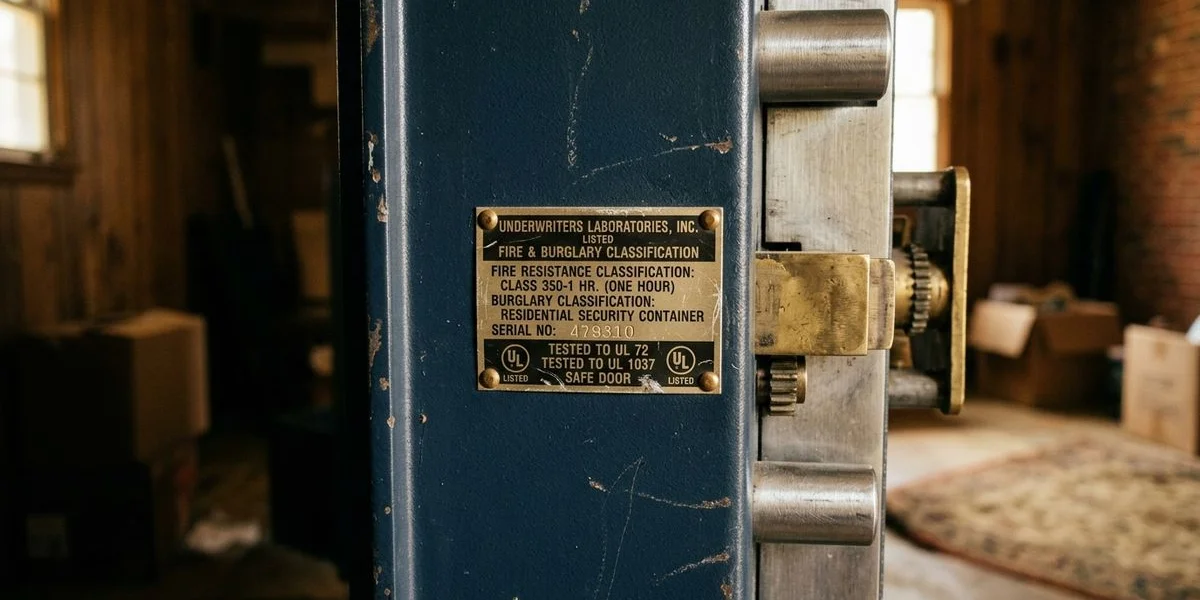
Always look for the actual Underwriters Laboratories certification plate securely fastened to the inside of the door. Treat any container missing this official independent label as having no fire rating at all. The same rule applies to theft protection. Heavy steel means nothing without an official RSC or TL stamp verifying its structural integrity.
The Other Half of the Equation
Even the best rating is completely undermined by bad placement and a lack of proper anchoring. A heavy container sitting loose on a wood floor is highly vulnerable to a coordinated attack. We have seen thieves tip over unanchored TL-30 units to gain better leverage with a long pry bar.
Anchoring your container to a concrete slab provides half of your total security. Securing the base prevents attackers from moving the unit into a weak position or hauling it away entirely. Proper installation ensures the vault functions exactly as the manufacturer intended.
Get the Right Safe for Your Use
Selecting the perfect security solution requires evaluating your specific risks and property layout. Our specialists are ready to help you navigate these important choices. Call (659) 399-0184 to talk through what you are protecting and the right rating to match. We sell, deliver, anchor, and service safes across Northern Alabama. For the full range of commercial and residential hardware, see our complete safe and vault services.
Frequently Asked Questions
What's the difference between a fireproof and a burglary safe?
What does TL-15 mean?
Can one safe be both fire- and burglary-rated?
Related Guides
Choosing a Home Safe: Document, Jewelry & Gun Safes
How to choose the right home safe by use — documents, jewelry, or firearms — including size, placement, lock type, and anchoring. Sales and installation in Huntsville.
Locked Out of Your Safe? Combination Recovery Options
Locked out of your safe? Learn your options — combination recovery, non-destructive manipulation, and last-resort drilling — and what to have ready before we arrive.